Pacific Palms Habitat Augmentation
Project Overview
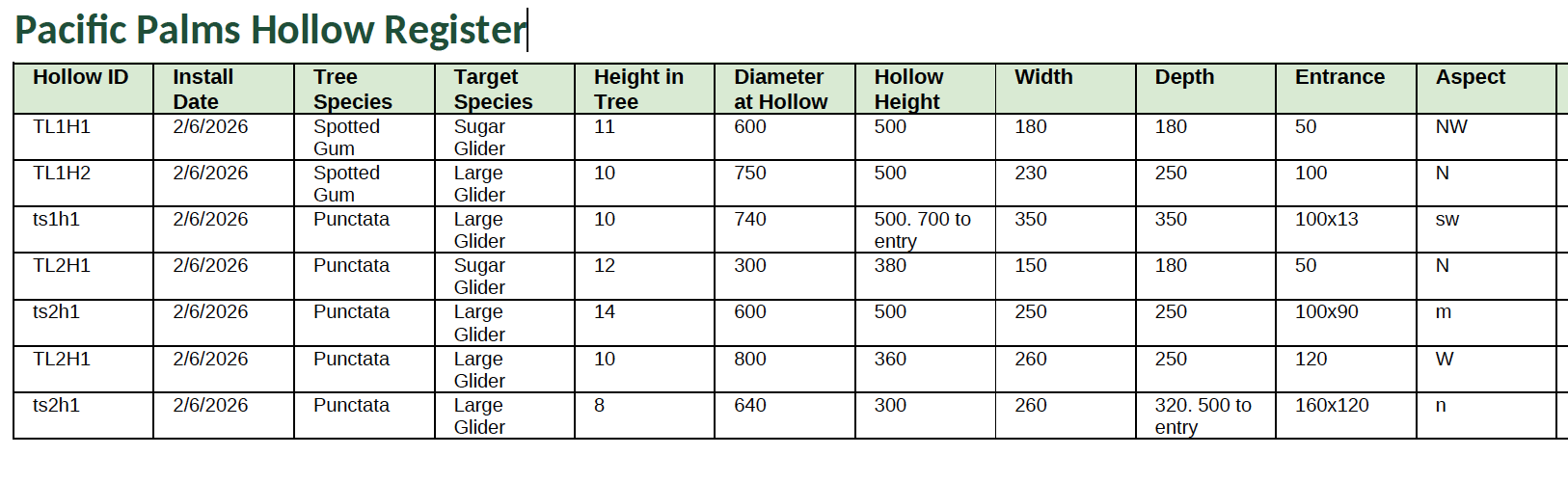
The Pacific Palms project focused on increasing the availability of secure nesting habitat within a mature forest by installing a series of purpose-built augmented tree hollows. Seven habitat assets were created across Spotted Gum and Punctata trees, providing immediate nesting opportunities for Sugar Gliders and Greater Gliders while retaining mature habitat trees within the landscape.
By creating habitat now, rather than waiting for natural decay processes, the project helps bridge the gap for hollow-dependent wildlife in a landscape where suitable natural hollows can take well over a century to develop.
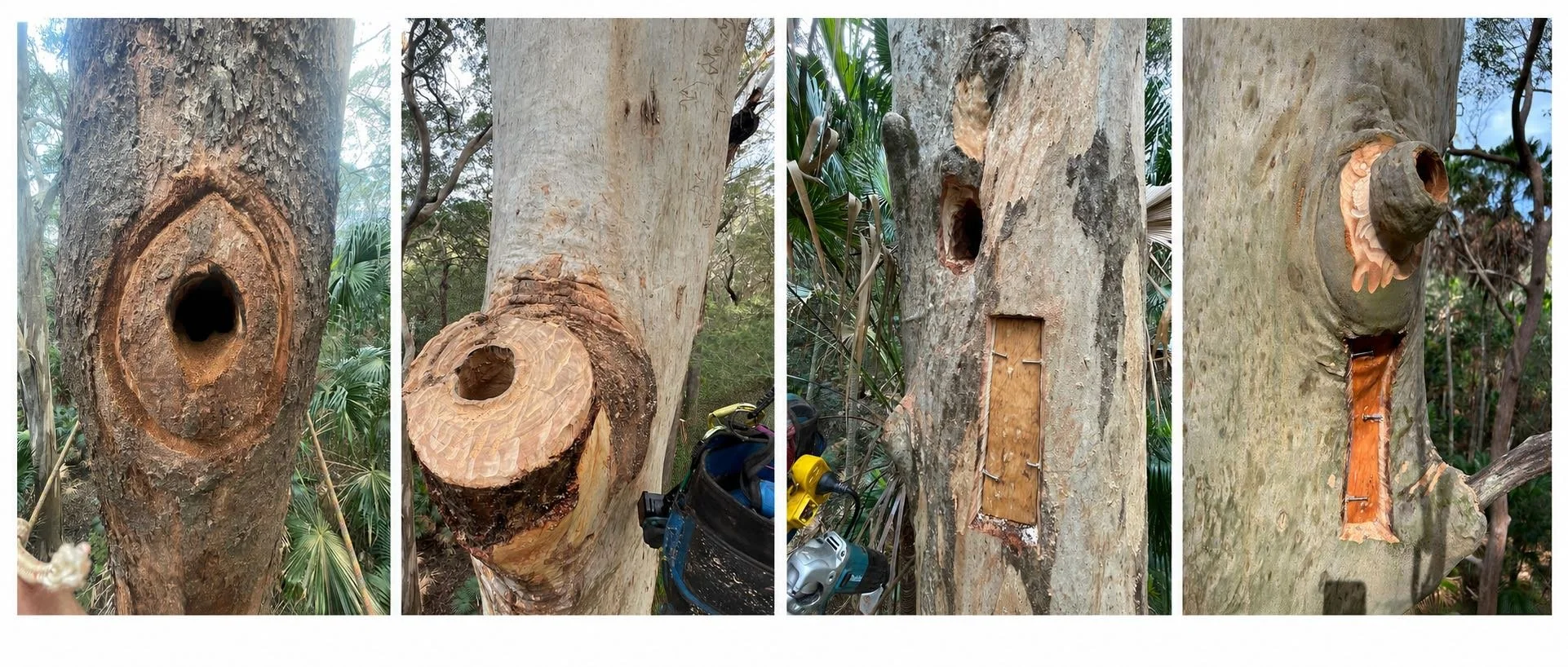
Project Snapshot
7 habitat assets installed across mature Spotted Gum and Punctata trees.
Purpose-built habitat for Sugar Gliders and Large Gliders, with hollows tailored to the size and behavioural requirements of each species.
Multiple mature habitat trees retained and enhanced, extending their ecological value while maintaining a safe landscape.
Natural hollow formation accelerated by generations, providing habitat that would otherwise take many decades to centuries to develop naturally.
From the Field
One of the standout features of the Pacific Palms project was its remarkable local ecology. Nestled within lush littoral rainforest, the site was characterised by dense Cabbage Tree Palm groves beneath towering Spotted Gum and Eucalyptus punctata. Accessing the work area meant descending steep terrain into the gully below—a challenging journey, but one that was richly rewarded by the quality of the habitat and the opportunity to enhance such a unique ecosystem.