Shallow Bay Augmented Habitat
Project Overview
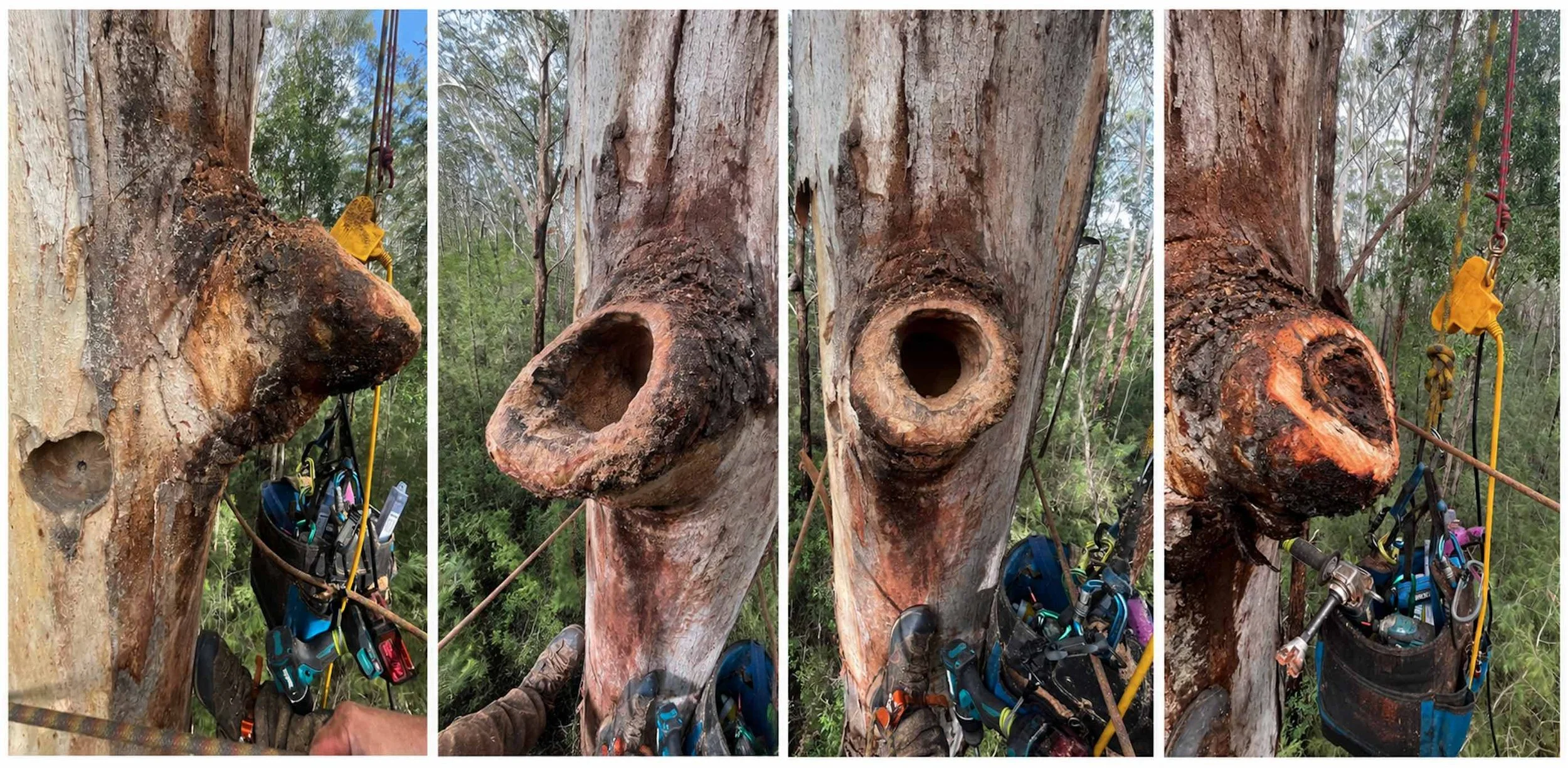
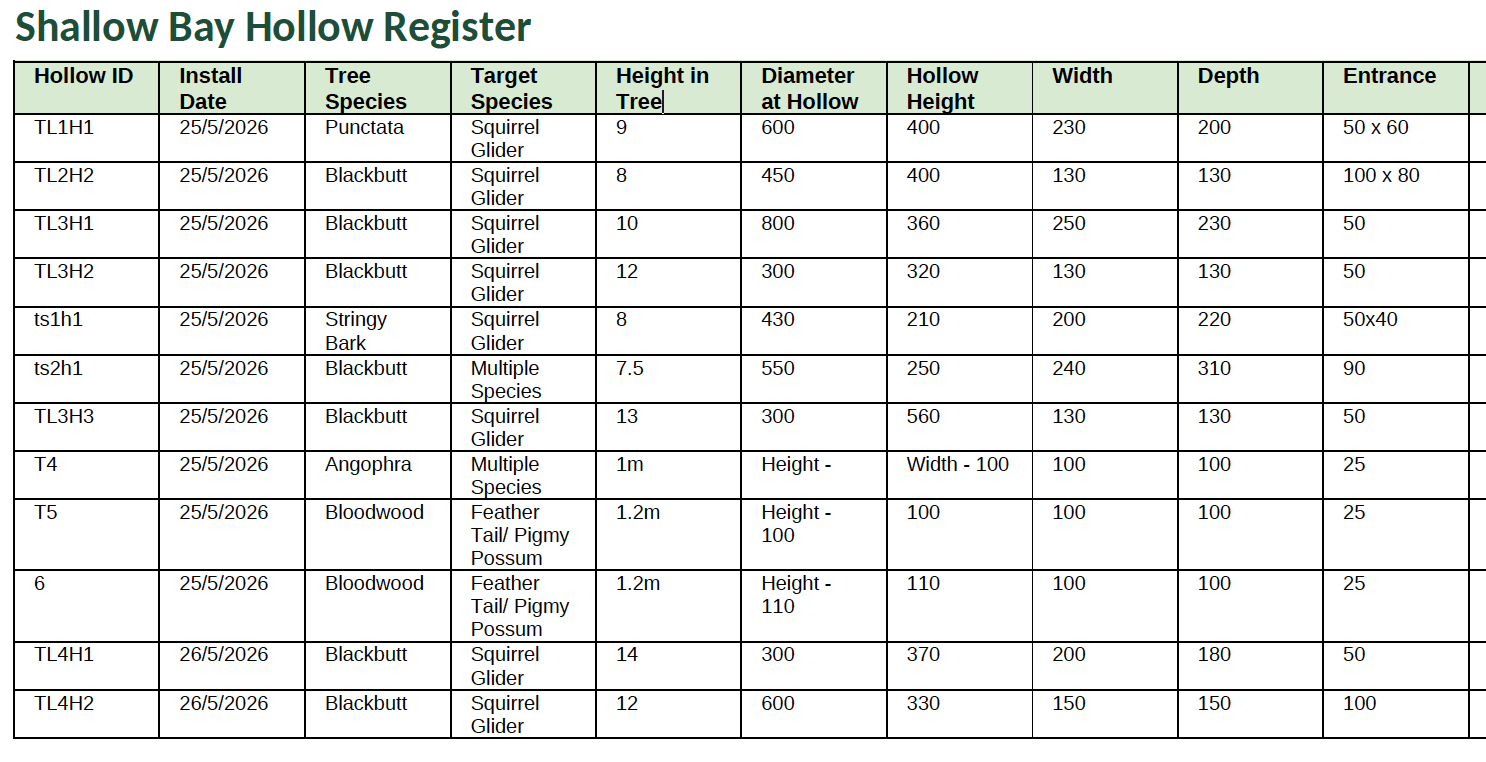
The Shallow Bay project focused on restoring critical nesting habitat within a diverse coastal forest by installing a network of purpose-built augmented tree hollows. Across the site, 11 habitat assets were created in a range of mature native tree species, providing immediate shelter for Squirrel Gliders, Feathertail Gliders, Pygmy Possums, small woodland birds and other hollow-dependent fauna.
Designed to replicate the structure of naturally formed hollows, each habitat asset was tailored to its target species while retaining mature trees that continue to play an important role in the surrounding ecosystem. Rather than waiting decades or centuries for natural hollows to form, the project delivers habitat immediately where it is needed most.
Project Snapshot
12 habitat assets installed, including carved hollows and habitat tubes across Blackbutt, Punctata, Stringybark, Bloodwood and Angophora trees.
Over 280 litres of new nesting habitat created for hollow-dependent wildlife.
Habitat created for five target species groups, including Squirrel Gliders, Feather-tail/Pygmy Possums, Small Gliders, Small Birds and Multi-species habitat.
Approximately 1,900 years of natural hollow formation accelerated, providing habitat that would otherwise take decades to centuries to develop naturally.
Mature habitat trees retained and enhanced, increasing biodiversity while maintaining a safe and functional forest landscape.
From the Field
Shallow Bay showcased the diversity that makes Australia's coastal forests so ecologically significant. Each habitat tree presented its own challenges, with varying species, stem architecture and natural defects requiring every hollow to be individually designed and carved to suit both the tree and its intended occupant.